
12 Reasons to Ask for a Dietitian Consult While Your Loved One is in the Hospital
Julio* had been in and out of the hospital for the past three months. Each time, he stayed less than a week but never ate well. He had pain and nausea, losing 20 pounds in 3 months. He thought he would eat better at home, when he felt better and where he could choose his meals. But, he didn’t realize how weak he had become. He used to walk six miles a day for exercise before he got sick. Now, he struggles to breathe just walking across his house. During this hospital visit, he needed help from a Physical Therapist Assistant to walk down one hallway. It was still a struggle. Julio's Physical and Occupational Therapists were worried. His poor nutrition might be making it harder for him to do their exercises.
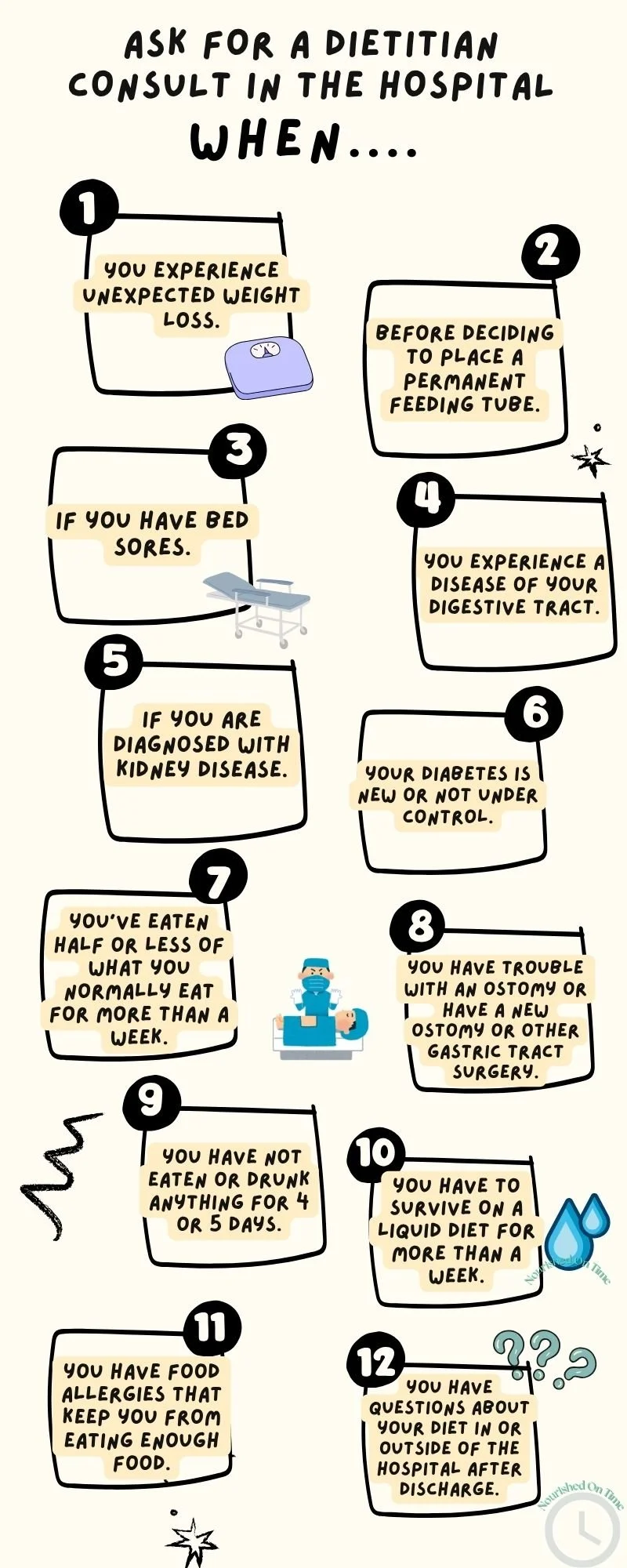
Here are 12 reasons to ask for a Dietitian consult while your loved one is admitted to the hospital:
1. If you notice significant, unintentional weight loss or muscle loss in your loved one’s appearance.
Losing weight means your family member isn’t getting enough nutrition. This can lead to a longer hospital stay and higher medical bills. A dietitian can help find ways to prevent or manage this.
2. Before you or your loved one decides to place a permanent feeding tube, like a PEG (Percutaneous endoscopic gastrostomy) or J-tube (jejunostomy).
Dietitians can explain your tube feeding options and how they work. They can help you think through if it's the right choice for your loved one’s health and life goals, along with the doctors. Dietitians are able to explain to you the process of starting tube feeds after the tube is placed. It is important to be aware that this can take time. If your family member gets a feeding tube, it may take time for their body to adjust to the nutrition as they probably have not eaten enough for a while.
3. If you see any wounds on your loved one’s skin (also known as bed sores or pressure injuries).
Nutrition is key to keeping skin healthy, especially when your loved one is spending a lot of time in bed(1).
4. For gastrointestinal diseases like Crohns, ulcerative colitis, celiac disease, cancers, irritable bowel syndrome, excessive diarrhea or excessive constipation.
Everyone’s digestive system is different. A dietitian can help identify food or supplement options that work best for your loved one’s unique needs. Many of these conditions require trial and error to see what works for your family member’s body. Keep an open mind. Dietitians may suggest some creative solutions that might really help.
5. If your family member is diagnosed with Chronic kidney disease or end stage renal disease.
Dietitians can guide you on what foods to include or avoid to help manage kidney disease. They can also help keep your family member’s lab results within a healthy range. After a hospital visit, it is important to follow up with a Dietitian about kidney disease. Most health insurance companies will provide phone access to dietitians for people with chronic kidney disease stage 3 or higher to prevent or slow the advancement of the disease.
6. If your family member has uncontrolled diabetes or if they have questions about nutrition and diabetes.
Diet plays a huge role in blood sugar control. Dietitians can provide valuable information on managing diabetes. Small changes make a big difference and reduce the risk of complications.
7. If your loved one has eaten less than 50% of what they normally eat for more than a week.
If your family member thinks not eating enough is no big deal, speak up about your concerns. Good nutrition is essential to avoid longer hospital stays and more complicated health issues.
8. If your loved one has an ostomy (especially if it’s new or if they’re having trouble with the output). Or if your loved one had a gastrointestinal surgery.
These procedures are an excellent reason to consult a Dietitian. Your loved one can make changes to their diet to significantly improve symptoms. Having an ostomy or taking out portions of your gastrointestinal system changes how the digestive system works. Dietitians can give personalized advice to manage many digestive issues that come up (such as very fast, liquid output or gas).
9. If they are NPO (not eating or drinking anything) or on a clear liquid diet for more than 4-5 days.
Many procedures require empty stomachs. But, if your family member has been without food or on a clear diet for more than 5 days, ask for a Dietitian consult. They may be able to recommend that the diet be advanced or recommend other forms of nutrition, when appropriate.
10. If they are on a full liquid diet for more than 7 days.
A full liquid diet basically consists of pureed soups, drinks, puddings, apple sauce. No solid foods are allowed, making it hard to get the right nutrition. There are many reasons the doctor may need your family member to be on a full liquid diet for several weeks. A Dietitian can help ensure your loved one is getting balanced nutrition.
11. If your loved one has multiple food allergies that are affecting the amount of food they eat.
A dietitian can work with the kitchen staff to ensure safe food options for your family member. While choices may be limited, they will do their best to find suitable options.
12. If you have any questions about your loved one’s diet while they are in the hospital or after discharge.
Don’t hesitate to ask questions! Dietary needs change during a hospital stay. It’s important to understand what your loved one needs before they go home.
Understanding Dietitian Visits in the hospital
Hospitals usually have systems for nurses and doctors to request dietitian consults. However, gaps in the system happen. If you think your family member needs a dietitian, ask for one. Be sure to share your specific concerns so the nurse can inform the dietitian beforehand. This allows the visit be more productive and helpful. Please note that the visit may not happen the same day, depending on the hospital so ask with plenty of time left.
Julio’s set nutrition goals to make progress on improving his strength and mobility
The Physical Therapist realized Julio needed a dietitian consult and asked me to see Julio. We talked about how not eating well was impacting his health. He decided he would try to eat at least half of his meals. We added snacks he liked to his meal trays and he started drinking high calorie supplements. He continued working with Physical Therapy, taking walks across the unit. Eventually, he was able to take longer walks down the hallway. After a week, he was ready to move to a lower acuity facility to continue working on his strength.
If you want to help your loved one navigate the hospital nutrition, subscribe for blog updates!
*I draw inspiration from real people and events for my stories, but I fictionalize them to protect privacy.
References:
(1) Munoz, Nancy DNC, MHA, RDN, FAND; Posthauer, Mary Ellen RDN, LD, FAND; Cereda, Emanuele MD, PhD; Schols, Jos M. G. A. MD, PhD; Haesler, Emily PhD, BN, P Grad Dip Adv Nurs. The Role of Nutrition for Pressure Injury Prevention and Healing: The 2019 International Clinical Practice Guideline Recommendations. Advances in Skin & Wound Care 33(3):p 123-136, March 2020. | DOI: 10.1097/01.ASW.0000653144.90739.ad
Disclaimer: The information provided here is for educational purposes only and does not constitute health or legal advice. Always consult your personal healthcare team and legal advisors about your specific situation.
